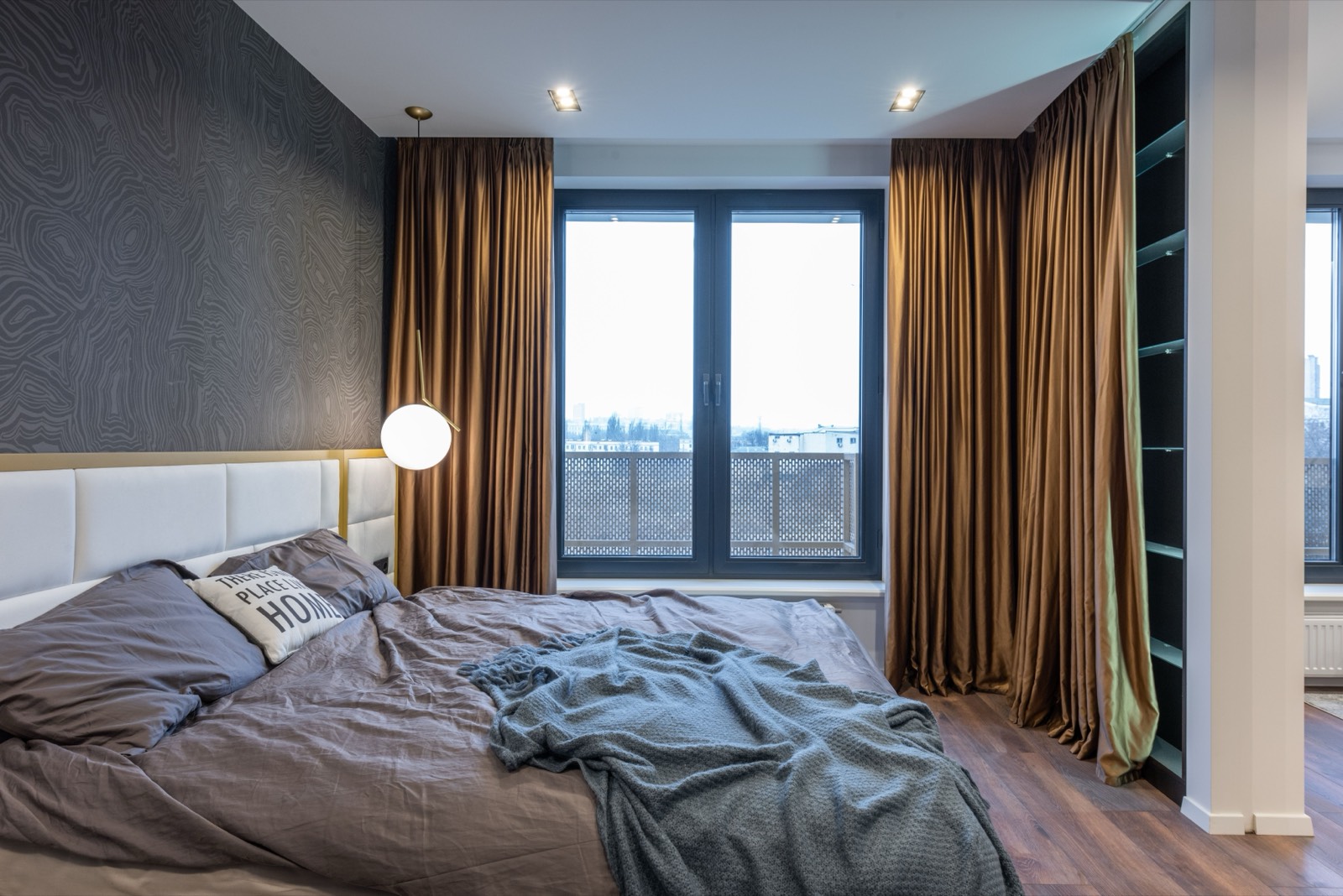
Lining gets far less airtime in a sales conversation than fabric or heading style, and that's a mistake. A customer picking a face fabric is choosing how the curtain looks. A customer picking a lining is choosing how the curtain performs, how much light it blocks, how it hangs, how well it protects the fabric from sun damage, and whether it does anything for the room's temperature. None of that is visible on a small swatch, which is exactly why it gets skipped over, and exactly why it's worth raising deliberately.
This guide covers the four lining options that come up in almost every curtain sale: unlined, standard, blackout, and thermal (interlined). It also covers the fitting details that catch retailers out, and the questions that get a customer to the right choice quickly.
Why lining is a decision, not an afterthought
A face fabric on its own does very little of the actual work a curtain is bought to do. Lining is what determines:
- Light control. Face fabric alone, even a heavy one, still lets a surprising amount of light through. Lining is what turns "reduces light" into "blocks light".
- Fabric protection. UV exposure fades and weakens fabric over time. A lining sits between the fabric and the window and absorbs most of that damage instead, extending the useful life of the curtain considerably.
- Drape and weight. Lining adds body. An unlined linen curtain moves and creases differently from the same fabric lined, and the difference is immediately visible once both are hanging.
- Insulation. A thermal or interlined curtain measurably reduces heat loss through a window in winter and heat gain in summer, which is a real, quantifiable benefit that's easy to undersell if it's never mentioned.
Every one of these is difficult to demonstrate with a fabric sample, which is exactly why it needs to be talked through rather than left for the customer to ask about.
Unlined curtains
No lining at all, just the face fabric, hemmed and finished on its own. The simplest and cheapest option, and the right one for a specific, narrower set of situations than most customers assume.
Look: Soft, fluid, and casual. Light passes through the fabric itself, so an unlined curtain in a sheer or lightweight weave reads as airy rather than substantial.
Light control: Minimal to none, depending on fabric density. Even a mid-weight cotton lets in meaningful light when unlined.
Fit: Sheers and voiles that are meant to filter light rather than block it, layered curtains where a lining will be added on a separate, heavier drape, and casual or seasonal rooms where a soft, informal look matters more than performance.
Watch for: Fading happens faster with no lining to absorb UV exposure, and the fabric hangs closer to the glass, so this is not the right recommendation for a south- or west-facing window with strong, direct sun, whatever the customer's first instinct is.
Standard lining
A separate layer, usually a cotton sateen, sewn to the reverse of the curtain. The default upgrade from unlined, and still the most common lining sold across the market, because it improves almost everything without pushing the price into premium territory.
Look: Cleaner and more structured than unlined. The lining hides seams and any lightfastness variation on the reverse of a pattern, so the curtain looks as good from the street as it does from inside the room.
Light control: Noticeably better than unlined, but not blackout. A standard-lined curtain still lets in some light, particularly at the edges and where fabric overlaps at the centre.
Fit: The right default for living rooms, dining rooms, and any space where the customer wants a finished look and moderate light reduction, without the extra cost or stiffness of a blackout layer.
Watch for: Standard lining protects fabric from UV reasonably well but not completely. On very sun-exposed windows, flag that some fading is still likely over several years, and mention thermal lining as the upgrade path.
Blackout lining
A lining woven or coated to block light almost entirely, typically a multi-layer or foam-backed construction rather than a single sheet of fabric. The category most customers already know by name, and the one they most often ask for without fully understanding the trade-offs between constructions.
Look: Heavier and more structured than standard lining. Triple-woven blackout linings drape close to how a standard lining behaves; foam-backed versions are stiffer and can crease more visibly at the fold, worth explaining before the customer is surprised by it after fitting.
Light control: Near-total when fitted correctly, though light still leaks around the edges and top of the curtain unless it's paired with a wrap-around track, a pelmet, or a close-fitting recess. Set that expectation up front; "blackout lining" does not mean "blackout room" on its own.
Fit: Bedrooms, nurseries, and media rooms are the obvious cases, but it's also worth suggesting for any room facing a street lamp, a neighbour's security light, or an early sunrise the customer has already complained about.
Watch for: Most blackout lining is white or pale on the reverse, which shows from outside at night when the room is lit. A coloured or patterned blackout lining costs more but avoids the mismatched look on the street-facing side, and it's worth raising before the order is placed rather than after a customer notices it themselves.
Thermal lining and interlining
Interlining adds a third layer, a soft, brushed fabric called bump or domette, sandwiched between the face fabric and the lining. It's not the same thing as blackout lining, though the two are often combined: interlining is about insulation and weight, blackout lining is about light. A curtain can be interlined without being blackout, and blackout without being interlined.
Look: Substantial and luxurious. Interlined curtains hang with a heavier, more tailored drape and fuller folds than any other option, which is a large part of why they're associated with higher-end curtain work.
Light control: Better than standard lining even without a dedicated blackout layer, simply from the added density of the extra layer, though a true blackout finish still needs a blackout-rated lining as well.
Fit: Period properties, older or draughty windows, and any room where the customer has mentioned cold in winter or overheating in summer. Interlining reduces heat transfer through the window in both directions, a genuinely useful, quantifiable benefit worth naming outright rather than leaving as an implied bonus.
Watch for: The added weight means more fabric per drop, a heavier finished curtain, and a real requirement to check that the pole or track specified can carry the load, especially over a wide span. This is exactly the kind of detail worth cross-checking against hardware, not assumed to be fine.
Matching lining to the room
Once a customer understands what each option actually does, most rooms sort themselves quickly:
- Bedrooms and nurseries: blackout as standard, interlined blackout if budget allows and the room also runs cold or hot.
- Living and dining rooms: standard lining by default, interlining as an upgrade in older or draughtier homes.
- Kitchens: unlined or standard lining in an easy-care fabric; heavy interlining is rarely practical where steam and washing are frequent.
- Home offices and media rooms: blackout, for the same reasons as a bedroom, glare on screens matters as much as sleep.
- Sun-facing rooms of any kind: at minimum standard lining for fabric protection, ideally interlined if fading and heat gain have both come up in conversation.
This is also where lining becomes a genuine upsell rather than a forced one. A customer who came in wanting "curtains for the bedroom" and leaves with blackout interlining because it solves a problem they mentioned unprompted, being too warm in summer and unable to sleep past sunrise, is a customer who feels well advised, not upsold.
Fitting details that catch retailers out
A few practical points that are easy to miss when quoting or making up a lined order:
- Extra fabric. Interlining adds bulk that affects the finished fullness and pleat depth, so it needs to be accounted for at the measuring and quoting stage, not adjusted for after cutting.
- Hardware weight. A heavily interlined pair of curtains, especially in a wide span or wave heading, can be noticeably heavier than the same curtains standard-lined. Match the pole or track rating to the finished weight, not just the fabric weight, a point covered in more detail in our guide to poles versus tracks.
- Care instructions. Interlined and blackout curtains are more often dry-clean only than a simple lined curtain, since washing can shift or bunch the inner layers. Set that expectation at the point of sale so it isn't a surprise a year later.
- Colour matching on the reverse. As noted above with blackout lining, a mismatched exterior view is a common, avoidable complaint. Show the customer the reverse of the sample, not just the face.
Questions that get customers to the right lining
A short set of questions surfaces the right lining faster than listing every option and letting the customer guess:
- "Do you need this room fully dark, or just softened?" Separates blackout from standard immediately.
- "Does this room run cold in winter or hot in summer?" Points toward interlining, which most customers have never been offered as a solution to either problem.
- "Does the window get direct sun for most of the day?" Flags a fading risk and rules out unlined fabric, whatever look the customer originally had in mind.
- "Would it bother you if the street sees a plain white lining from outside at night?" Surfaces the coloured blackout lining upgrade before it becomes a post-installation complaint.
- "Will these need to go in the wash, or are you happy with dry cleaning?" Rules interlining in or out for practical, lower-maintenance households.
Why lining is hard to sell from a sample, and how to fix that
Lining is arguably the hardest curtain decision to sell from swatches, because almost none of what makes one lining different from another is visible on a small offcut of fabric. A blackout sample looks like a slightly heavier piece of white cloth. An interlined sample is just two pieces of fabric stacked together. None of that conveys how the finished curtain will actually hang, or how dark the room will get once the sun goes down.
A visualization that shows the customer's own window with the finished, hanging curtain, rather than a flat sample, closes most of that gap. It won't replicate the room going fully dark at night, but it does show the weight, fullness, and drape differences between a standard-lined and an interlined curtain immediately, the exact detail a swatch can't communicate and a customer usually can't picture on their own.
Show the difference lining makes before the order is placed
Let customers see how a lined, blackout, or interlined curtain actually hangs in their own room. 10 free credits included, no credit card needed.
Get Started Free