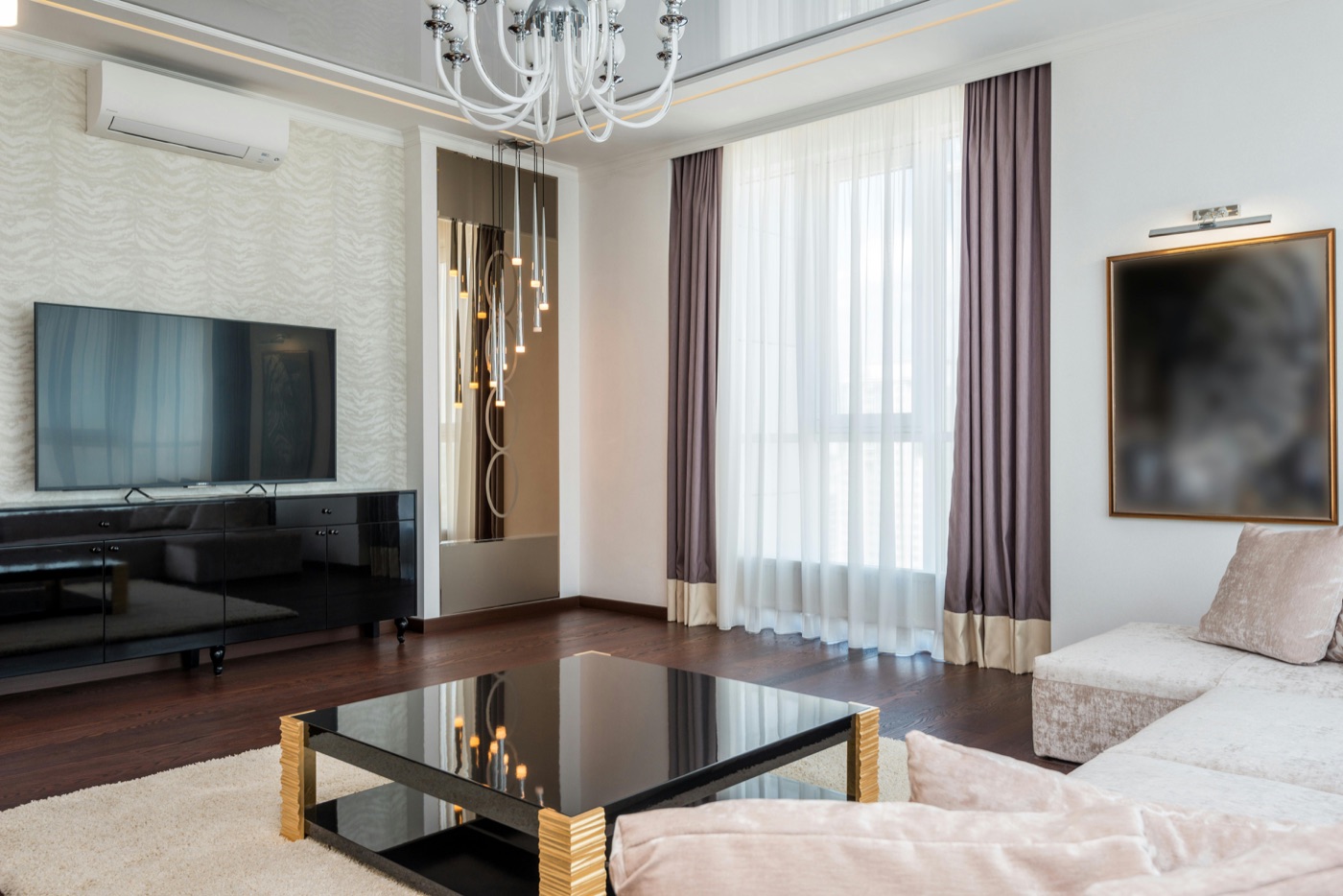
Custom curtains are not a commodity. Unlike ready-made curtains where the price is set by the manufacturer, custom orders require you to price each job individually — accounting for fabric, making, lining, hardware, measuring, and installation. Done well, this is where the margin in curtain retail lives. Done inconsistently, it leads to undercharging, scope creep, and awkward conversations with customers who got a different quote last time.
This guide walks through the components of a custom curtain price, the most common pricing models, and the mistakes that quietly erode profitability.
The components of a custom curtain price
Every custom curtain quote has the same underlying structure, even if retailers package and present it differently:
Fabric cost
The most variable component. Fabric cost depends on the fabric price per metre, the heading style (which determines the fullness ratio — typically 2 to 2.5 times the finished width), the drop, and whether the fabric has a pattern repeat that requires extra yardage to match.
A common mistake is quoting fabric cost based on the finished width without accounting for fullness. A 2-metre wide window with a 2.5x fullness ratio requires 5 metres of fabric per drop, not 2 — and with a pattern repeat, potentially more. Always calculate required fabric before quoting, not after.
Lining
Standard lining, blackout lining, interlined (thermal), and unlined are different price points and should be quoted separately rather than buried in a single fabric price. Customers who don't understand the value of lining will resist paying for it; customers who do understand will pay willingly — but only if it's presented as a distinct choice.
Making charges
The workroom or making-up cost is typically charged per drop for standard headings, with a premium for complex headings like hand-stitched pinch pleat or goblet. If you're outsourcing making, your charge to the customer should reflect your cost plus a margin — not a fixed markup applied uniformly to all heading types.
Hardware
Poles, tracks, finials, rings, and brackets are often quoted separately, which is correct — but hardware is also frequently underpriced or treated as an afterthought. A quality pole with matching finials can significantly increase the ticket value of an order without requiring much additional selling effort, especially when the customer can see how it looks in a visualization.
Measuring and fitting
Whether you charge separately for measuring and installation or build it into the curtain price, the cost needs to be accounted for. Many retailers offer free measuring as a sales tool, which is fine — but the time cost should be factored into your overall pricing model rather than genuinely given away.
Pricing models
There's no single right way to structure a custom curtain quote. The three most common models each have advantages:
Itemised quoting — every component is listed and priced separately (fabric, lining, making, hardware, fitting). Transparent and defensible; customers can see exactly what they're paying for. Works well for higher-value orders where customers expect detail. The risk is that it invites negotiation on individual line items.
Per-metre pricing — a single price per metre of finished curtain, covering fabric, making, and lining. Simpler to quote and easier for customers to understand. Works best when your range is relatively uniform in fabric price and construction. Breaks down when customers want to mix budget fabric with a complex heading, or premium fabric with basic making.
Package pricing — predefined tiers (e.g. Standard, Premium, Luxury) with a fixed price per drop within each tier. Easiest to quote consistently and to train staff to use. The disadvantage is less flexibility for unusual jobs. Best suited to retailers with a defined range who want to simplify the sales process.
Many retailers use a hybrid: package pricing for standard orders, itemised quoting for complex or high-value work.
Where retailers leave money on the table
A few pricing mistakes come up consistently:
- Not charging enough for pattern matching. A large pattern repeat can add 20–40% to the fabric requirement. This should always be calculated and priced in — it's not a cost you should absorb.
- Undervaluing premium headings. Hand-stitched pinch pleat or goblet pleat takes significantly longer to make than pencil pleat. The price difference should reflect that — and customers who choose these headings are generally less price-sensitive, so there's less risk in charging appropriately.
- Giving hardware away as a discount. Discounting hardware to close a sale erodes margin on one of the most profitable elements of the order. A better approach is to demonstrate the value of quality hardware — which visualization makes easier, since customers can see the difference between a basic pole and a statement one in their actual room.
- Not revisiting prices when supplier costs change. Fabric prices fluctuate. A pricing model that made sense 18 months ago may be quietly unprofitable now. Build in a regular review — at minimum annually.
How visualization changes the pricing conversation
One practical benefit of room visualization that retailers often don't anticipate is its effect on upselling. When a customer can see their chosen curtains in their actual room, they're more engaged with the details — and more open to considering upgrades.
A customer who came in for basic pencil pleat curtains and sees a visualization of how the same room would look with wave heading and a statement pole is in a genuinely different buying position than one who was handed a swatch book and asked to imagine it. The visual comparison does the selling. Your job is just to show it.
This has a direct effect on average order value — and on the margin per order, since customers who upgrade to premium headings and hardware are moving into higher-margin territory.
Increase average order value with visualization
Show customers the upgrade before they ask for it. 10 free credits included — no credit card needed.
Get Started Free