Ask a customer whether they want curtains on a pole or a track and most will not have a strong opinion. They picture the finished look, not the mechanism behind it. That gap is exactly where retailers add value, because the hardware choice is not really a style preference. It is determined first by the heading style, then by the weight and span of the curtain, and only after that by how the pole or track should look in the room.
Getting this wrong is one of the more expensive mistakes in the trade, because unlike a fabric substitution, a hardware mismatch is usually only discovered at the fitting visit. This guide walks through what separates poles from tracks, when each one wins, and the details that prevent a return visit.
Poles: what they are good at
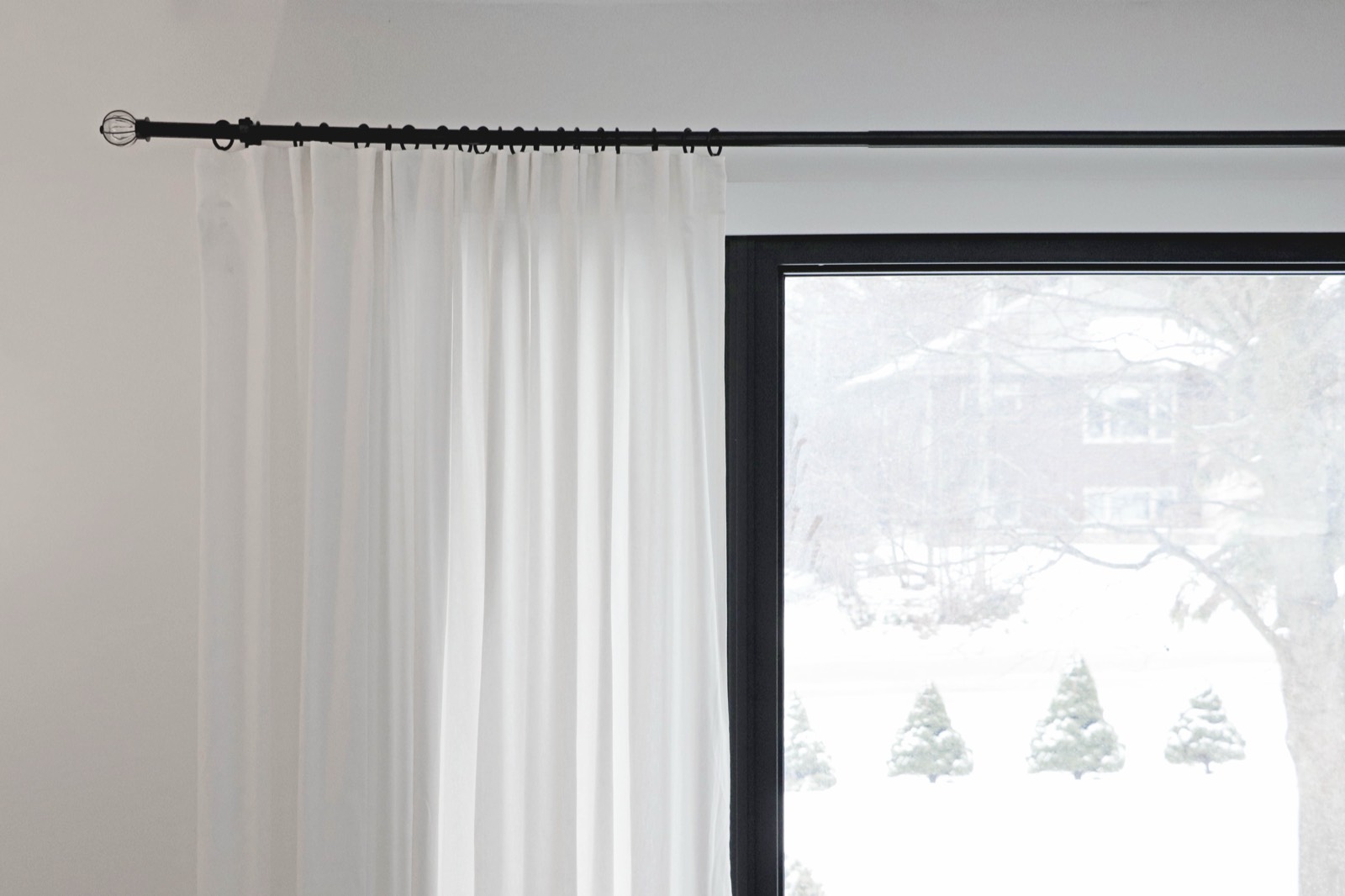
A pole is a length of wood, metal, or resin, supported on brackets, with the curtain hanging from rings or eyelets that slide along it. The pole itself is visible, and finials at each end cap it off, which is why poles read as a decorative element in their own right rather than just a fixing.
Diameter matters more than customers expect. A slim 19mm pole suits lightweight fabrics and smaller windows, and looks lost under a heavy interlined curtain on a wide span. A 28mm or 35mm pole carries weight more comfortably and reads as more substantial in a large room. Eyelet headings add a further constraint, since the eyelet ring size has to match the pole diameter exactly, typically 35mm or 50mm, so confirm the heading before ordering the pole.
Bracket spacing controls sag. A pole that looks fine empty can visibly bow once loaded with a full-length, fully lined curtain. As a rule of thumb, brackets every 100 to 120 centimetres keep a mid-weight curtain properly supported, with brackets moved closer together for heavier interlined fabric or a pole longer than about 2.4 metres in one continuous length. For very wide spans, a centre support bracket is worth the small aesthetic compromise rather than risking a pole that droops within a year.
Finish is part of the sale. Brushed steel, matte black, brass, and natural or painted wood each set a different tone, and a pole in the wrong finish can undercut an otherwise good fabric choice. Customers rarely think to ask about finish until they see it against their wall colour, which is one more reason a visualization that shows the actual pole, not a generic placeholder, closes more of these decisions in one visit.
Tracks: when they are the better answer
A track is a channel, usually aluminium or uPVC, fixed to the wall or ceiling, with gliders that carry the curtain hooks along a hidden rail. Tracks disappear behind a pelmet or the top of the curtain and carry weight and width more efficiently than most poles, which makes them the default for larger or more demanding jobs.
- Wave heading needs a track. The evenly spaced gliders that create a wave's continuous ripple only exist on a specialist wave track. There is no pole equivalent, so once a customer has settled on wave heading, the hardware decision is already made.
- Corded tracks reduce wear on the fabric. A cord-operated track means the customer never touches the leading edge of the curtain to open and close it, which matters for pale or delicate fabrics that mark easily from repeated handling.
- Bendable tracks handle bay and curved windows. A flexible aluminium track can be shaped on site to follow a bay or a shallow curve, something no rigid pole can do without visible joints. This is the single most common reason a customer who initially asked for a pole ends up with a track once the window shape is properly assessed.
- Ceiling fixing suits a low or sloped wall. Where there is not enough solid wall above the window, or the window sits close to a sloped ceiling, a ceiling-fixed track solves a problem a wall-mounted pole cannot.
Getting the weight and span right
Every pole and track has a stated maximum load, usually expressed in kilograms per metre, and it is worth checking this against the actual curtain rather than assuming a mid-range product will cope. A pair of full-length interlined curtains in a heavy weave can weigh considerably more than the same curtains unlined, and a hardware system rated for lightweight fabric will sag or fail under that load within months, not years.
Span matters as much as weight. Most poles are supplied in fixed lengths and joined with a barrel connector for wider windows, which is fine structurally but should be planned so the join sits behind a bracket rather than in open view. Tracks are more often cut to size on site, which avoids the join problem entirely and is one more reason tracks tend to win on very wide openings.
Matching hardware to heading style
The heading, covered in more detail in our guide to curtain heading styles, decides most of the hardware question before the customer even reaches it:
| Heading style | Pole compatible | Track compatible |
|---|---|---|
| Pencil pleat | Yes | Yes |
| Eyelet | Yes | No |
| Pinch pleat | Yes | Yes, with a specialist track |
| Wave / S-fold | No | Yes, wave track only |
| Tab top | Yes | No |
| Goblet pleat | Yes | No |
Confirming heading before hardware, rather than the other way round, avoids the awkward conversation where a customer has fallen in love with a pole finish that their chosen heading cannot actually use.
Special situations worth flagging early
A handful of window and room types come up often enough to be worth a standard checklist item during the sales conversation, not something noticed for the first time at the measuring visit:
- Bay windows. A bay usually needs either a bendable track shaped to the angles, or two or three separate poles meeting at the corners. Poles at a bay corner require a corner bracket and leave a visible break in the curtain run, which some customers dislike once they see it, so this is worth showing rather than describing.
- Motorized tracks. Demand for motorized curtain tracks has grown steadily, particularly for hard-to-reach windows or smart-home installations, and it changes the sale: motorized systems are wired to a track, not a pole, and need power run to the fixing point before the wall is finished, so the decision has to happen earlier in the project than a standard order.
- Layered treatments. A sheer layer behind a main curtain typically needs a double track, or a pole with an additional inner track fitted behind it. If a customer wants sheers added later, the hardware should be specified for both layers at the outset rather than retrofitted, which is rarely as neat.
- Rented properties. Some tenants are restricted in what they can fix to a wall or ceiling, which can rule out heavier pole and bracket combinations in favour of lighter track systems or tension rods, and is worth asking about before quoting rather than after.
Mistakes that turn into a second visit
- Selling the pole before confirming the heading. An eyelet curtain cannot go on a track, and a wave curtain cannot go on a pole. Confirm heading first, every time.
- Underestimating bracket count on a wide window. A pole that looks adequately supported in the shop can flex noticeably once the full weight of lined fabric is added at home. When in doubt, add a bracket.
- Not checking wall type before quoting fixing time. Solid masonry, plasterboard, and dot-and-dab construction all take fixings differently, and plasterboard in particular may need cavity fixings or a mounting batten that adds time to the job.
- Treating finish as an afterthought. A striking fabric next to a mismatched or dated pole finish undersells the whole order. Finish should be chosen alongside fabric, not bolted on at the end.
Letting customers see the hardware, not just imagine it
Hardware is one of the harder parts of a curtain order to sell from a catalogue photo, because a pole or track only really makes sense in context, against the customer's own wall colour, ceiling height, and window proportions. A customer looking at a swatch book and a finish sample has to imagine three things at once: the fabric, the heading, and the pole, and most people can only reliably picture one of those.
Showing a visualization of the finished window, complete with the actual pole finish or track style under consideration, removes that guesswork and tends to shift the conversation toward the better hardware option rather than the cheapest one, since the customer can see directly what a quality finial or a clean wave track actually adds to the room.
Show customers the actual hardware in their room
Generate a photorealistic preview of any pole, track, or finish in the customer's own space. 10 free credits included, no credit card needed.
Get Started Free