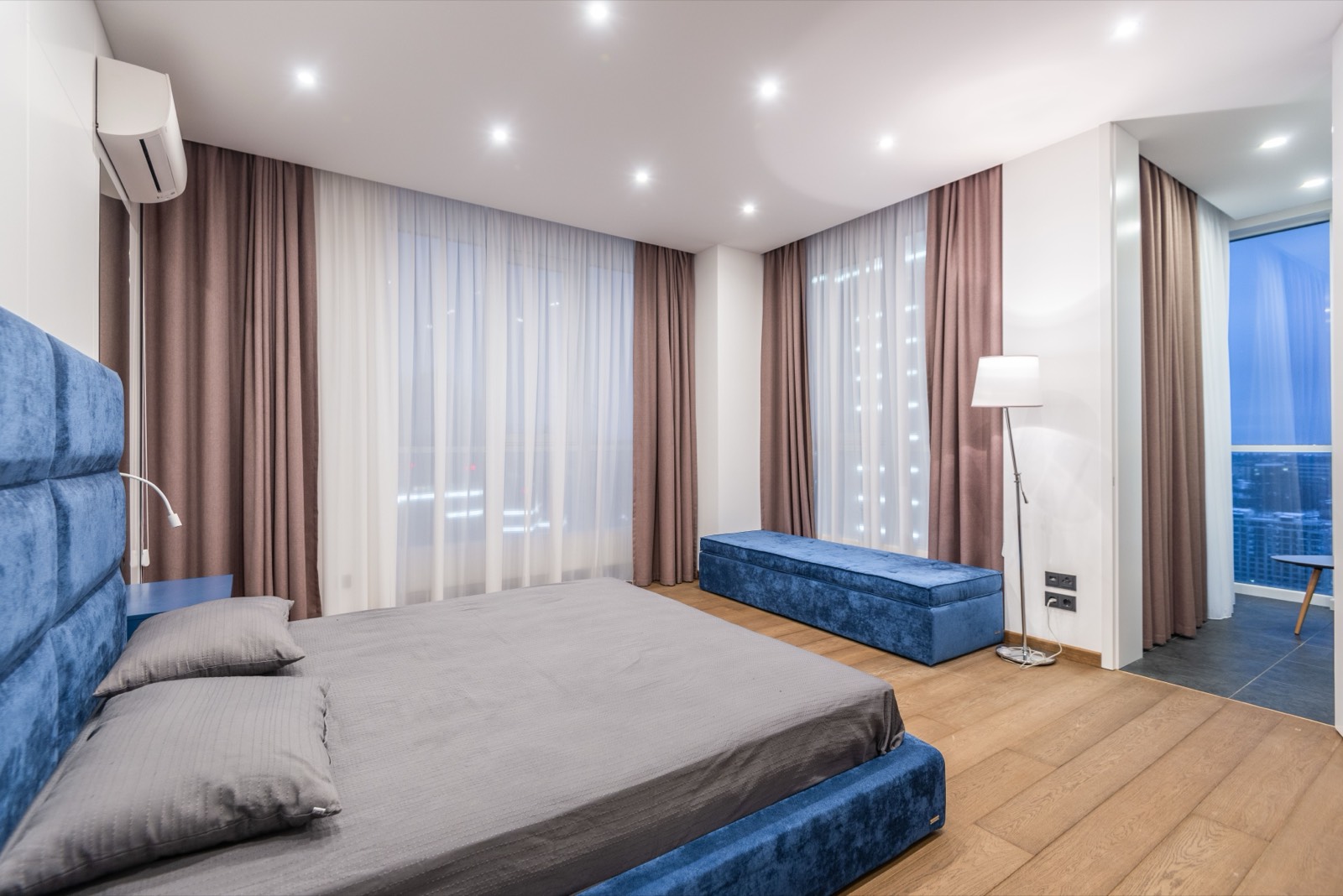
Ask a customer what they want from a blackout curtain and most will say the same thing: a completely dark room. Ask a few more questions and it usually turns out they mean several different things by that. Some want total darkness for sleep. Some are trying to stop a neighbour's security light hitting the ceiling at 2am. Some are really asking about keeping a room cooler in summer, which blackout construction alone does not solve.
For retailers, blackout is one of the most requested and most misunderstood categories in the shop. Customers arrive already using the word, which makes it tempting to treat the sale as settled before the real conversation starts. It isn't. Whether a blackout curtain actually delivers a dark room depends on the fabric construction, the fit, and the hardware around it, not just the label. This guide covers how blackout curtains actually work, where they fall short of the promise, and how to spec the job so the result matches what the customer had in mind.
How blackout curtains actually block light
Blackout fabric blocks light in one of two ways. The older, and still most common, method is a multi-layer woven lining, typically three tightly woven layers of polyester cotton stitched or bonded together and fitted behind a decorative face fabric. Light has to pass through enough overlapping, dense weave that almost none gets through, while the fabric still drapes close to how an ordinary lined curtain would.
The newer, cheaper method is a foam-backed or acrylic-coated lining: a single layer of fabric with an opaque coating bonded to the back. It blocks light just as effectively when new, costs less, and is quicker to make up, but it is stiffer, creases more visibly at the fold of each pleat, and can crack or flake with age and repeated folding, giving it a shorter useful life than woven blackout. Worth knowing before quoting, and worth explaining to a customer choosing on price alone: coated blackout at a fraction of the cost will not look or last the same as woven.
A smaller but growing category is blackout face fabric itself, woven dense enough to block light without a separate lining layer at all. These tend to be plain, heavier-weight fabrics marketed specifically for the category, useful when a customer wants blackout performance without the extra bulk of a face fabric plus a separate lining.
Where light still gets in
Even correctly specified woven blackout curtains rarely produce a genuinely dark room on their own, and it's worth saying this to a customer before they notice it themselves at 6am. Light gets in three ways: through the gap where the curtain overlaps in the middle, along the top where the curtain meets the pole or track, and down the sides where the curtain is narrower than the window recess.
Each has a fix, and each fix is a hardware or fullness decision rather than a fabric one:
- Middle overlap. Specify enough extra width, an overlap arm on the track, or simply wider curtains, so the two panels cross rather than meet edge to edge.
- Top light. A pelmet, a valance, or a wrap-around track or pole fitted close to the wall closes the gap above the curtain. A plain pole with open rings will always leak light along the top, whatever fabric hangs behind it.
- Side light. Curtains and hardware fitted wider than the window opening, extending onto the wall on both sides, close the gap a recessed or exactly-window-width fitting leaves open. This is covered in more depth in our guide to curtain poles and tracks.
None of this is obvious from a swatch, and it's the single most common source of blackout complaints after a sale: the fabric did its job, the fitting didn't. Raising it at the quoting stage, before the order, costs nothing and avoids a remake.
Three routes to a dark room
Full blackout doesn't have to come from the curtain fabric itself. Retailers have three practical routes, and the right one depends on budget, the look the customer wants, and how often the room actually needs to go fully dark.
- Blackout lining behind a decorative face fabric. The most common choice. The customer picks any face fabric they like for the room and the lining (see our guide to curtain linings) does the work. The route to recommend when the curtain itself is meant to be a feature.
- Dedicated blackout fabric as the face fabric. Fewer colour and pattern choices, usually a flatter, more technical look, but one layer instead of two, lower cost, and less bulk. Useful for a smaller window or a tighter budget.
- A separate blackout roller blind fitted behind decorative curtains that stay purely for looks. Worth proposing more often than it is. The curtains can be a lightweight, sheer, or patterned fabric with no lining at all, chosen for appearance, while the blind behind it does the actual light-blocking and comes down only when needed. It also sidesteps the side-light and top-light problems above, since a correctly fitted blind inside the recess blocks light far more completely than a curtain alone ever will.
For a customer who keeps asking for both a particular decorative look and total darkness, the blind-behind-curtains combination is very often the answer that satisfies both, and it's an upsell most shops aren't routinely offering.
Who actually needs full blackout
Full blackout isn't the right spec for every bedroom, and recommending it by default can lose a sale to a competitor offering something better suited to the brief, or worse, generate a complaint from someone who actually wanted a dim, cosy room rather than total darkness.
Blackout is the right call for:
- Bedrooms used by shift workers sleeping during the day
- Nurseries and children's rooms, where a consistent sleep environment matters more than it does for an adult
- Home cinema or media rooms, where any ambient light reduces screen contrast
- Bedrooms on a street-facing elevation with strong streetlighting, a neighbour's security light, or an early sunrise the customer has already complained about
Standard or interlined lining is often the better recommendation for:
- Adult bedrooms where the customer wants a dim, relaxed room rather than cave-dark
- South or west facing rooms where heat retention and glare matter as much as darkness, where interlining does more useful work than blackout alone
- Living rooms and dining rooms, where full blackout usually looks heavier and more formal than the room calls for
Asking what the room is actually for, rather than assuming blackout is always the goal, heads off a mismatch before it becomes a remake.
Misconceptions worth correcting before the order
- Blackout doesn't automatically mean warmer in winter or cooler in summer. Thermal performance comes from interlining, a padded layer between the face fabric and the lining, which is a separate spec decision. A woven blackout lining blocks light; on its own it does very little for heat transfer. A customer buying blackout specifically to cut a heating bill needs interlining added, not just blackout.
- Blackout can trap condensation against a cold window if the room isn't ventilated, particularly in winter in an older or poorly insulated property. Worth a brief mention for bedrooms with single glazing, since the fix (leaving a small gap, or airing the room daily) is simple but easy to miss if nobody says anything.
- Cheaper coated blackout linings can have a slight odour when new and take longer to air out than woven blackout. Worth mentioning if a customer plans to hang curtains in a nursery straight out of the packaging.
- The backing colour matters from outside. Most blackout lining is white or pale on the reverse, which is visible from the street at night when the room is lit. A colour-matched or patterned blackout lining avoids this at extra cost, and it's a far better conversation to have before the order than after a neighbour mentions it.
- Blackout curtains generally need dry cleaning rather than home washing, since washing can delaminate a coated lining or shift the layers of a woven one. Worth setting that expectation at the point of sale, not a year later.
Questions that lead to the right blackout spec
A handful of questions sort most customers into the right setup faster than listing every option and letting them guess:
- "Do you need the room completely dark, or just noticeably dimmer?" Separates blackout from standard or interlined lining immediately.
- "Is this for sleep, or for something else, a cinema room, a shift worker, a nursery?" Shapes which of the three blackout routes fits best.
- "Does the room get cold in winter or hot in summer?" Flags whether interlining should be added alongside blackout, not instead of it.
- "Would it bother you if a plain white lining showed from the street at night?" Surfaces the colour-matched lining upsell before it becomes a complaint.
- "Do you want the curtain itself to be the dark fabric, or would you rather keep a lighter curtain and hide a blackout blind behind it?" Opens the blind-behind-curtain option many customers never think to ask about.
Selling blackout without a swatch
Blackout is a hard sell from a swatch, for the same reason lining in general is hard to sell from a swatch: almost nothing that distinguishes a dense woven blackout from a coated one shows up in a hand-sized sample, and no swatch can show a customer how the top, sides, and middle of their actual window will behave once curtains are hung and hardware is fitted.
A visualization of the customer's own window with the finished curtain in place makes the fitting conversation concrete rather than hypothetical. It's also where the pelmet, wrap-around track, or wider hardware upsell naturally comes up. Once a customer can see how the finished look sits against their window, showing them the version with a pelmet closing the top gap, or extended track width closing the sides, becomes a visible improvement rather than an abstract add-on they have to imagine on their own.
Show customers exactly how dark their room will be
Let customers see the finished blackout curtain, pelmet, and hardware in their own room before they order. 10 free credits included, no credit card needed.
Get Started Free