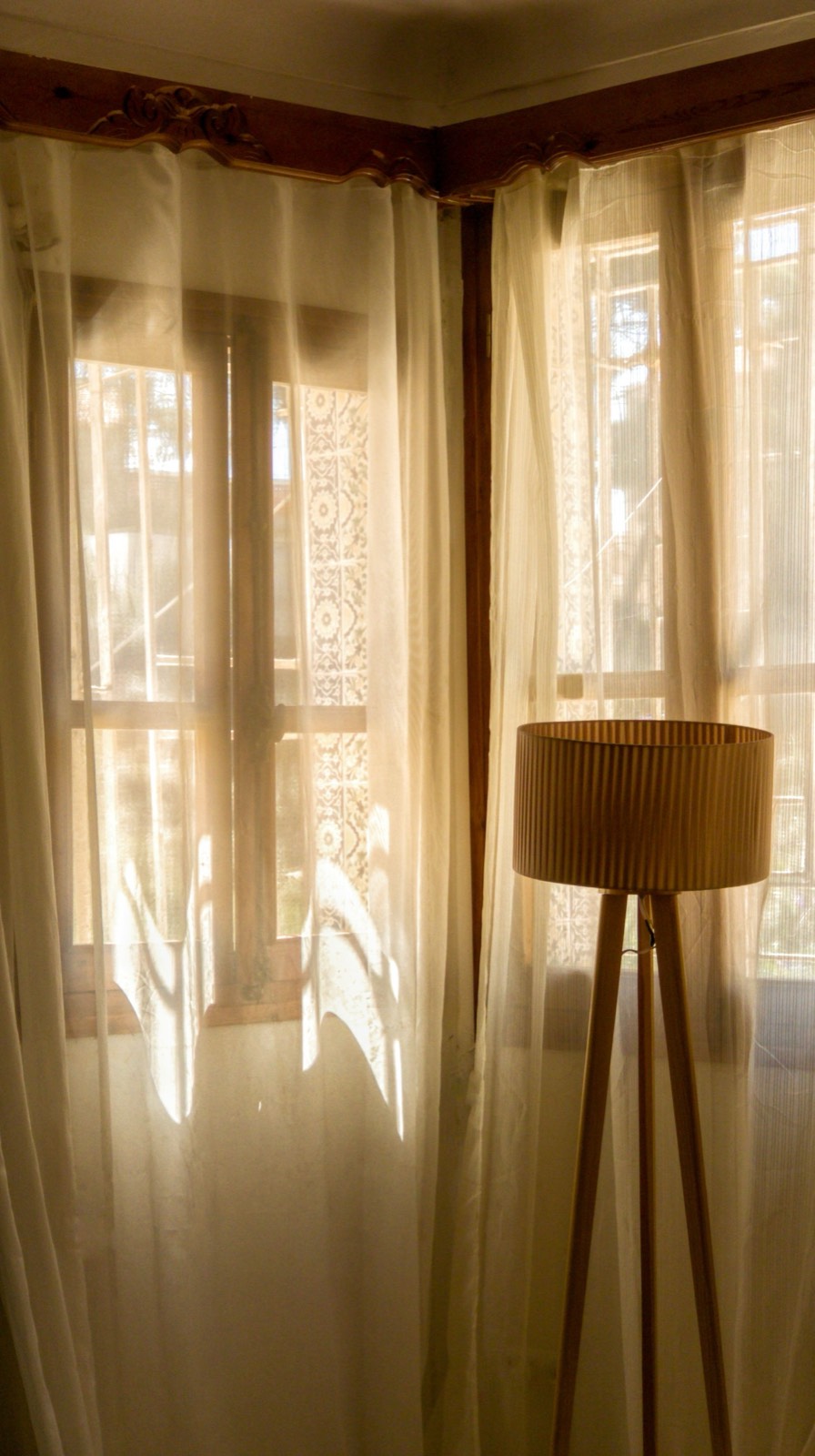
Ask a customer what they want from their living room window and "something sheer" rarely comes up on its own. What comes up is "I want it bright, but I don't want the neighbours watching me eat breakfast" or "I like how soft it looks but I still want proper curtains." Both of those are a sheer curtain problem, even when the customer never uses the word. Recognising that, and knowing which sheer fabric and which hardware actually solves it, is a skill most retailers never formalise. They sell sheers the same way they sell everything else: show a sample, quote a price, move on.
That undersells both the product and the opportunity. Sheers are a distinct category with meaningfully different weights, different fullness requirements from standard curtains, and their own hardware logic when layered with heavier drapes, which is how most of them are actually used. Getting any of that wrong doesn't ruin the sale, but it does produce curtains that billow unevenly, block less privacy than the customer expected, or simply can't be hung the way they were pictured.
Why sheers are their own category, not "thin curtains"
A heavier curtain is primarily chosen for how it looks and how it blocks light. A sheer is chosen for what it does while the heavier curtain is open, which is most of the day. That changes the job it has to do:
- Daytime privacy without lost light. A sheer lets a room read as bright and open from inside while making it hard to see in clearly from outside, especially once the light outside is brighter than the light inside, which is the case for most of the daylight hours.
- Softening a hard window line. Blinds and bare glass have a flat, functional edge. A sheer adds movement and texture without committing to a heavy, light-blocking drape across the whole window.
- A layering role, not a standalone one, in most sales. In the majority of living rooms and bedrooms, sheers are sold alongside a heavier curtain or blind, not instead of one. The sheer handles daytime; the heavier layer handles night and full blackout.
- A genuine upsell that's easy to skip past. Because sheers are comparatively inexpensive per metre, it's tempting to treat them as a rounding error on the quote rather than a deliberate choice with its own fabric and fullness decisions. That's exactly where margin and customer satisfaction both leak away.
The main sheer fabric types
"Sheer" covers a wide range of fabric weights and weaves, and the differences matter more than most sample books suggest.
Voile
A plain, lightweight, closely woven fabric, usually polyester or a polyester-cotton blend, occasionally linen. The default sheer fabric for most retail ranges.
Look: Soft, slightly crisp drape with a smooth, even surface. Diffuses light evenly rather than casting a texture.
Weight: Light to mid-light. Heavier voiles hold their fold better and resist see-through at night when a room is lit; very light voiles move more with airflow but offer less privacy after dark.
Fullness: 2.5 to 3 times the track width is typical, more than most heavier curtains need, because thin fabric needs extra volume to avoid looking flat and limp rather than soft.
Best for: The general-purpose sheer choice for living rooms and bedrooms, and the fabric most customers picture when they say "sheer curtains."
Muslin and scrim
A looser, more open weave than voile, with a visible texture and a softer, more relaxed hand. Muslin has a slightly irregular, almost linen-like surface; scrim is typically even looser and more transparent.
Look: Casual and textural rather than smooth. Reads as natural and relaxed, often chosen to match a linen or boucle interior rather than a formal one.
Weight: Light, but with more body than a very fine voile because of the open weave's texture.
Fullness: Similar range to voile, 2.5 to 3 times, though the looser weave can tolerate slightly less fullness without looking sparse.
Best for: Customers who've specifically said they don't want curtains that look "too polished" or too similar to a hotel room. Works well layered behind a natural-fibre heavier curtain.
Lace and patterned net
Sheer fabric with a woven or embroidered pattern, ranging from subtle self-texture to visible lace motifs. More decorative and more associated with traditional interiors, though contemporary geometric and botanical patterns have broadened its appeal.
Look: Decorative, with the pattern visible both against the light and as a surface texture. Can read as dated if the pattern is overly traditional for the room; works well when chosen deliberately rather than as a default.
Weight: Varies widely depending on the density of the pattern, from almost voile-light to noticeably heavier where embroidery adds weight.
Fullness: Often slightly less than plain voile, 2 to 2.5 times, since the pattern itself adds visual interest and doesn't need the same density of folds to avoid looking flat.
Best for: Kitchens, period properties, and customers who want the sheer itself to be a visible design feature rather than an invisible layer behind a heavier curtain.
Dim-out sheer
A heavier, more tightly woven sheer, sometimes described as a "soft blackout voile," that filters considerably more light and offers real night-time privacy without going fully opaque.
Look: Slightly denser and less translucent than standard voile, with a subtle sheen in some finishes. Still reads as a sheer, not a curtain, from a normal viewing distance.
Weight: Mid weight, the heaviest fabric that still qualifies as a sheer rather than a lightweight curtain.
Fullness: 2.5 times is usually enough, since the denser weave already reads as fuller than an equivalent amount of lightweight voile.
Best for: Bedrooms and street-facing rooms where a customer wants more privacy and light control than standard voile gives, but doesn't want or can't fit a full heavier curtain layer. A genuinely useful middle option that's worth proposing explicitly, because customers rarely know to ask for it by name.
Layering sheers with heavier curtains
Most sheer sales aren't standalone, they're one half of a two-layer window treatment, and the layering decision affects both look and hardware.
The standard arrangement puts the sheer closest to the glass and the heavier curtain in front of it, on the room side. This lets the sheer stay closed during the day for light diffusion and privacy while the heavier curtain opens fully to the sides, and lets the heavier curtain close over the sheer at night without the sheer getting in the way of the fold.
Stack-back matters more with two layers than one. Each curtain needs its own clear space to one or both sides of the window when fully open, and a sheer with generous fullness takes up real width when stacked, even though the fabric itself is thin. Measure stack-back for both layers before confirming track or pole length, not just for the heavier curtain, or the sheer ends up permanently bunched at the edge of the glass.
Hardware for layered sheers
Sheers layered with a heavier curtain need hardware built for two tracks, not one, which is a different quote line than a single curtain and worth itemising rather than bundling in.
- Double tracks. A front and back track on the same bracket, the most common solution for a sheer-plus-curtain combination, usually with the sheer on the back track closest to the window.
- Pole with an integrated liner track. Some poles include a slim track fitted to the back of the pole itself, carrying the sheer behind a curtain hung from rings on the pole. A cleaner look than a visible double track, at a higher hardware cost.
- Wave heading behind pencil pleat or eyelet. A popular contemporary combination: a wave-headed sheer on a slim rear track, with a pencil pleat or eyelet heavier curtain on the visible front pole. The wave heading's clean, even ripple reads well even when the sheer is the less decorative layer.
Whatever the combination, confirm the clearance between the two tracks or between the pole and its liner track before ordering. Too little clearance causes the layers to catch on each other when drawn; too much creates a visible gap between the sheer and the window reveal.
Measuring and fullness for sheers
Sheers need more generous fullness than most retailers default to, for a reason that's easy to explain to a customer: thin fabric needs more of it to look intentional rather than skimpy. A 2x fullness that looks perfectly adequate in a mid-weight cotton curtain looks thin and flat in voile.
A few measuring details specific to sheers are worth building into a standard checklist:
- Hem weights. Lightweight sheer fabric billows and lifts with airflow far more than a heavier curtain does. A sewn-in weighted hem tape keeps the bottom edge hanging straight and stops the fabric catching on furniture or a nearby heat source. Skipping this on a lightweight voile is one of the most common causes of a dissatisfied sheer customer.
- Drop allowance for shrinkage. Polyester voile is generally stable, but a linen or cotton sheer can shrink slightly after its first wash. Build a small allowance into the drop measurement for natural-fibre sheers specifically, since a sheer that's an inch short reads far more noticeably than a heavier curtain that's the same amount short.
- Width per panel for very wide windows. Sheer fabric is usually narrower per bolt than curtain-weight fabric, so wide windows may need more seamed widths than the customer expects. Flag this early, since visible seams in a sheer are more noticeable against light than in an opaque curtain.
Common mistakes
- Underselling fullness to save fabric cost. A sheer quoted at the same fullness ratio as a heavier curtain almost always looks disappointing once hung. The fabric cost difference is small; the visual difference is not.
- Hanging sheers too close to a radiator or heat source. Polyester sheers can scorch, discolour, or in extreme cases melt slightly if they hang against or very close to a hot radiator. Flag window configurations where this is a risk before the order is confirmed, not after a complaint.
- Not warning about fading on south- or west-facing windows. Sheers sit closest to the glass and take the brunt of direct sun. Even UV-stable fabrics fade faster in this position than a heavier curtain layered in front of them would. Set the expectation at the point of sale.
- Treating the sheer as a free add-on instead of a real line item. A customer who understands that the sheer is doing a specific job, daytime privacy and softness, rather than being thrown in as a formality, is more likely to choose a better fabric and a proper layered hardware setup instead of the cheapest option available.
Selling sheers, and why visualization helps
Sheers are genuinely difficult to sell from a swatch. A voile sample held up to a showroom light gives almost no sense of how a full-width curtain will diffuse daylight in a specific room, and it says nothing about how it will look layered behind a patterned heavier curtain the customer is also considering. The combination is the thing being sold, not either fabric in isolation.
A visualization of the customer's actual window, showing both layers together, closes that gap directly. It's the difference between describing how light will filter through a voile and a customer seeing it filter through their own window, in their own room, with the heavier curtain they're already leaning toward. That combination view is also where the layering upsell naturally happens: customers who see the finished look are far more likely to ask for it than customers who were only shown two separate samples and asked to imagine the rest.
Show customers the layered look before they order
Generate a photorealistic visualization of sheers and heavier curtains together in the customer's actual room. 10 free credits to get started.
Get Started Free